
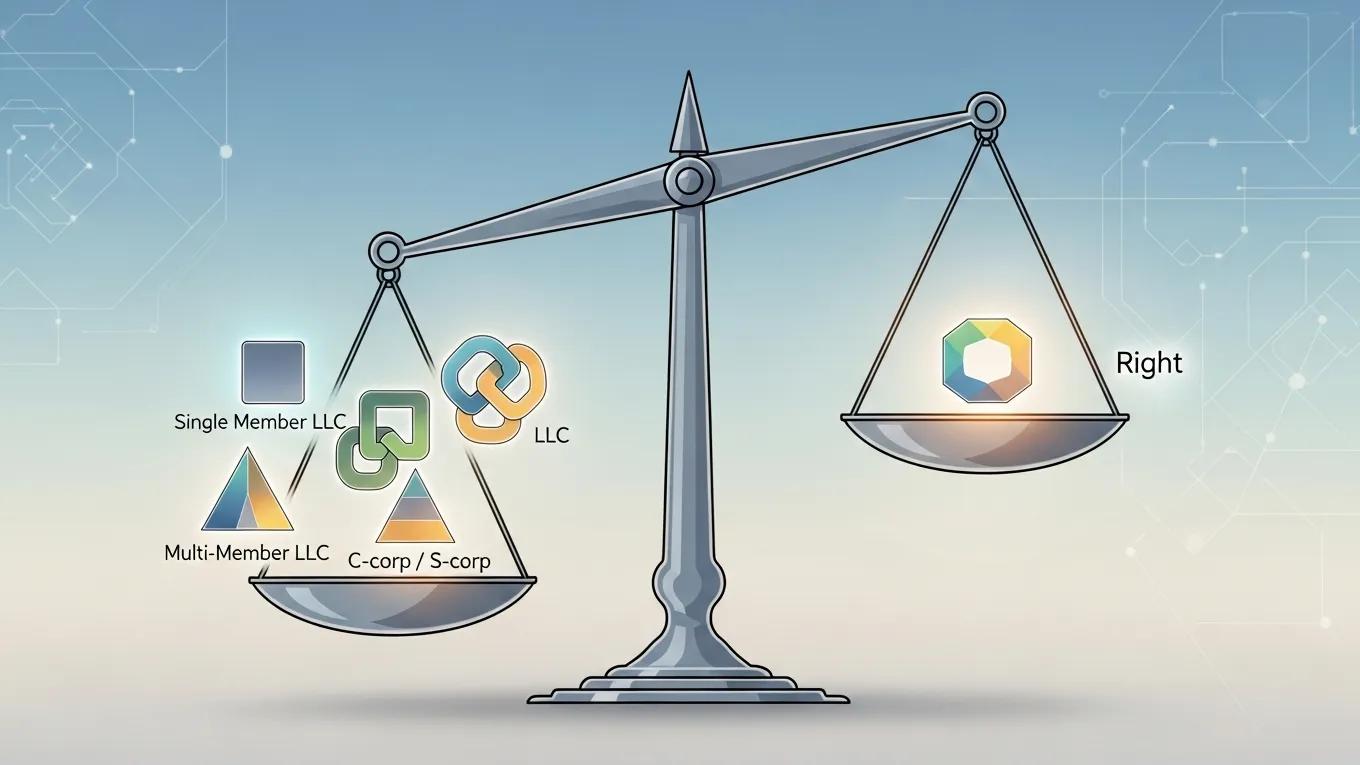
Choosing the Best LLC: Single or Multi-Member in Florida
Legal Counsel for Florida Business Structures
Single Member LLC vs. Multi Member LLC in Florida presents business owners with a critical choice that shapes liability protection, taxation, and operational flexibility. Whether you’re exploring a limited liability company Florida formation or evolving an existing entity, understanding how each structure functions under Florida law will guide you to optimal outcomes. This guide defines single-member LLCs and multi-member LLCs, compares ownership and management frameworks, details tax filing and election options, outlines formation and compliance steps, examines advanced asset protection and estate planning strategies, and answers common questions to help you choose the ideal entity for your business goals.
What Is a Single-Member LLC and How Does It Work in Florida?
A single-member LLC in Florida is an LLC with one owner that provides limited liability protection while offering pass-through taxation and simplified governance. This structure suits entrepreneurs seeking full control and minimal administrative complexity. For example, a freelance consultant can form a single-member LLC to separate personal assets from business liabilities and file taxes on Schedule C.
What Defines a Single-Member LLC in Florida?
A single-member LLC in Florida is defined by having one individual or entity as its sole member. Under Chapter 605 of the Florida Revised Limited Liability Company Act, this entity is treated as a disregarded entity for federal tax purposes unless an S corporation election is made. Ownership is documented in the Articles of Organization and controlled through a straightforward operating agreement.
Florida Revised Limited Liability Company Act, Chapter 605
What Are the Key Advantages of a Single-Member LLC?
Before diving into details, consider these principal benefits of a single-member LLC in Florida:
- Complete Control: The sole member makes all decisions without partner consensus.
- Simplified Taxation: Default pass-through treatment avoids corporate tax layers.
- Lower Administrative Burden: Fewer formalities and recordkeeping requirements.
- Cost Efficiency: Reduced formation and maintenance fees compared to corporations.
- Flexible Management: Easy to amend operating agreement and ownership structure.
These advantages enhance responsiveness and cost savings while laying the groundwork for streamlined operations and potential growth opportunities.
What Are the Florida-Specific Disadvantages and Liability Risks for Single-Member LLCs?
Florida law affords single-member LLCs less robust creditor protection than multi-member LLCs. Creditors can petition courts to bypass charging orders and directly attach LLC assets. Courts may also more readily pierce the corporate veil in instances of undercapitalization or commingling of funds. These liabilities underscore the importance of careful asset segregation and proper capitalization before conducting business.
Florida Statutes, Chapter 605
How Is a Single-Member LLC Taxed by Default and What Are S-Corp Election Options?
A single-member LLC defaults to a disregarded entity, with profits and losses reported on the member’s Schedule C of Form 1040. Self-employment taxes on net earnings apply unless an S corporation election is filed via Form 2553. Electing S corp status can reduce FICA liabilities by paying the owner a reasonable salary while treating remaining distributions as dividends.
Internal Revenue Service, Publication 334, Tax Guide for Small Business (For Individuals Who Use Schedule C)
What Is a Multi-Member LLC and What Are Its Benefits in Florida?
A multi-member LLC in Florida is an LLC with two or more members that combines pass-through taxation with collaborative ownership and stronger asset protection. This format suits ventures needing diverse expertise or capital contributions. For instance, two real estate investors can form a multi-member LLC to pool resources and shield personal assets while reporting partnership income on Form 1065.
How Is a Multi-Member LLC Defined and Structured in Florida?
Under Florida law, a multi-member LLC is formed when Articles of Organization list two or more members. Ownership percentages, voting rights, capital contributions, and profit distributions are outlined in a comprehensive operating agreement. Members can choose manager-managed or member-managed governance based on operational needs.
What Are the Advantages of a Multi-Member LLC for Asset Protection and Capital Access?
A multi-member LLC offers several strategic benefits:
- Enhanced Creditor Shield: Creditors generally must obtain charging orders rather than directly seizing assets.
- Greater Capital Resources: Multiple members can contribute funds, expanding growth potential.
- Shared Expertise: Diverse skill sets and networks strengthen decision-making.
- Credibility: Lenders and partners often view multi-member structures as more stable.
- Flexibility in Profit Allocation: Custom profit-sharing arrangements align with member contributions.
These advantages support robust business development and risk management under Florida’s LLC statutes.
What Are the Disadvantages and Compliance Complexities of Multi-Member LLCs?
Despite benefits, multi-member LLCs face complexities:
- Operating Agreement Necessity: Failing to document terms can lead to disputes and default statutory rules.
- Partnership Formalities: More rigorous recordkeeping and annual reporting obligations.
- IRS Audit Risk: Partnerships with significant assets or complex allocations may attract closer IRS scrutiny.
- Decision Deadlocks: Equal voting rights require tie-breaker mechanisms to avoid impasses.
- Costlier Formation: Drafting a detailed operating agreement often incurs higher legal fees.
How Is a Multi-Member LLC Taxed and What Are the Partnership Filing Requirements?
A multi-member LLC is taxed as a partnership by default. It files Form 1065 annually and issues Schedule K-1s to each member for inclusion on their personal returns. Members pay self-employment tax on their distributive shares unless the LLC elects S corporation status via Form 2553.
What Are the Key Differences Between Single-Member and Multi-Member LLCs in Florida?
Single-member and multi-member LLCs diverge across ownership, taxation, liability protection, governance, capital access, and compliance. The table below summarizes these distinctions:
How Do Ownership and Management Structures Differ?
In a single-member LLC, one owner holds all equity and decision-making authority. A multi-member LLC distributes ownership interests among members, requiring clear governance protocols. Multi-member entities often adopt manager-managed structures to streamline operations and prevent member disputes, whereas single-member entities function with minimal oversight.
How Do Tax Implications Compare Between SMLLCs and MMLLCs?
Tax treatment varies significantly between LLC types. Single-member LLCs file Schedule C, reporting profits directly on the owner’s Form 1040 and paying self-employment taxes on net earnings. Multi-member LLCs file Form 1065, allocate income via Schedule K-1, and require each member to report their share on individual returns. Both structures can elect S corp status to optimize FICA obligations.
What Are the Asset Protection and Liability Nuances Under Florida Law?
Under Florida Statutes Chapter 605, multi-member LLCs benefit from stronger creditor protection, as charging orders are typically the exclusive remedy. Single-member LLCs may face exceptions allowing creditors to access assets directly. Courts have also demonstrated a greater willingness to pierce the veil of undercapitalized single-member LLCs, emphasizing proper capitalization and separate recordkeeping.
Why Is the Operating Agreement More Critical for Multi-Member LLCs?
An operating agreement in a multi-member LLC serves to:
- Define member contributions, ownership percentages, and voting rights.
- Establish profit and loss allocation formulas tailored to each member.
- Detail dispute resolution, buy-sell provisions, and withdrawal procedures.
- Specify management roles, decision thresholds, and meeting protocols.
A robust operating agreement prevents statutory defaults and facilitates smooth governance and succession planning.
How Do You Form and Maintain an LLC in Florida: Requirements for Single and Multi-Member LLCs?
Forming an LLC in Florida involves standardized steps that apply equally to single-member and multi-member entities, followed by ongoing compliance obligations. While you can form this yourself, hiring an attorney to ensure is done properly is a great first step towards a successful business.
What Are the Florida LLC Formation Steps: Articles of Organization, Registered Agent, and EIN?
To form an LLC in Florida:
- File Articles of Organization with the Florida Division of Corporations and pay the filing fee.
- Designate a Registered Agent with a physical Florida address for service of process.
- Obtain an EIN from the IRS for tax and hiring purposes (conslut your CPA)
- Draft an Operating Agreement to outline ownership, governance, and financial arrangements.
- Publish a Notice (if required) in a local newspaper when mandated by county regulations.
Completing these steps establishes your Florida LLC as a legally recognized entity ready for business.
What Are the Ongoing Compliance Obligations for Florida LLCs?
Maintaining good standing requires:
- Filing the Annual Report with the Division of Corporations by May 1 each year.
- Paying the annual report fee to avoid administrative dissolution.
- Updating the registered agent or address changes within 60 days.
- Keeping accurate records of finances, minutes, and member actions.
- Meeting any industry-specific licensing or permitting requirements.
- Register for your business tax receipt in the county you physically do business.
How Can You Convert a Single-Member LLC to a Multi-Member LLC in Florida?
To add members and convert:
- Amend the Articles of Organization to reflect new member names and contributions.
- Update or draft a new Operating Agreement detailing roles and profit-sharing.
- Issue membership certificates or capital accounts for incoming members.
- Notify the IRS if tax treatment changes (e.g., from disregarded entity to partnership).
- File revised annual reports including updated member information.
This process ensures smooth transition and proper tax classification.
When Should You Choose a Single-Member vs. Multi-Member LLC?
Consider these decision factors:
- Control vs. Collaboration: Opt for a single-member LLC when complete autonomy is essential; choose multi-member to leverage diverse expertise.
- Asset Protection: Multi-member LLCs generally deliver stronger creditor defenses in Florida.
- Capital Needs: Multi-member structures facilitate pooled resources and funding.
- Compliance Tolerance: Single-member LLCs require fewer formalities; multi-member LLCs demand detailed governance.
- Exit and Succession Plans: Multi-member agreements support orderly transitions and buy-sell triggers.
Align structure with strategic priorities and risk appetite to maximize long-term success.
What Are the Advanced Asset Protection and Estate Planning Considerations for Florida LLCs?
Integrating asset protection and estate planning into your LLC strategy can preserve wealth and ensure seamless succession.
How Do Charging Orders Affect Single-Member vs. Multi-Member LLCs in Florida?
Charging orders limit creditor remedies differently:
- Single-Member LLCs: Creditors may bypass charging orders and attach assets directly.
- Multi-Member LLCs: Charging orders are generally the sole remedy, protecting member interests more effectively.
This distinction influences how you structure ownership to safeguard personal assets.
What Is Piercing the Corporate Veil and How Does It Impact LLC Liability?
Piercing the corporate veil occurs when courts disregard LLC separation due to undercapitalization, commingling funds, or fraud. Florida courts have shown greater willingness to pierce single-member LLCs, making proper capitalization, separate bookkeeping, and clear operating agreements essential defenses.
How Can LLCs Be Integrated Into Florida Estate Planning and Succession Strategies?
Incorporate your LLC into an estate plan by:
- Transferring membership interests into a revocable or irrevocable trust.
- Structuring buy-sell agreements triggered by retirement, death, or disability.
- Appointing successor managers to ensure seamless operations.
- Layering asset protection trusts to shield interests from probate and creditors.
These steps preserve continuity and minimize probate exposure.
What Are Best Practices for Succession Planning in LLCs?
Effective succession planning includes:
- Defining clear transfer mechanisms for membership interests.
- Valuing the business periodically to set equitable buy-out prices.
- Designating successor managers and trustees in your operating agreement or trust documents.
- Training future leaders and documenting operational procedures.
- Reviewing plans annually to reflect changing goals and regulations.
Proactive succession frameworks protect business value and member relationships.
What Are the Tax Filing Requirements and Election Options for Single and Multi-Member LLCs in Florida?
Understanding federal tax obligations and election windows can optimize after-tax returns for both LLC types.
How Does Pass-Through Taxation Work for Single-Member LLCs?
Single-member LLCs default to pass-through taxation as disregarded entities. Profits and losses flow directly to the owner’s personal return, reported on Schedule C. Self-employment taxes apply to net income, and estimated quarterly taxes may be required.
How Are Multi-Member LLCs Taxed as Partnerships?
Multi-member LLCs file Form 1065 to report partnership income, deductions, and credits. Each member receives a Schedule K-1 indicating their share of taxable items, which is then reported on individual returns. The LLC itself pays no federal income tax.
When and How Should LLCs Elect S Corporation Status?
A new LLC has 75 days from the date the LLC is formally formed or begins doing business (whichever comes first) to elect S Corp status for your first year of operations. An S corporation election (Form 2553) must be filed within two months and 15 days of the tax year start for an existing business who desires a change. Electing S corp status can reduce self-employment taxes by splitting income into reasonable salary versus distributions, though it adds payroll and compliance requirements.
What Are the Self-Employment Tax Implications for Both LLC Types?
Key self-employment tax implications include:
- Single-Member LLCs: Entire net earnings are subject to self-employment tax (15.3% on up to the Social Security wage base).
- Multi-Member LLCs: Members pay self-employment tax on guaranteed payments and their distributive share of business income.
- S Corp Elections: Only salaries are subject to FICA, while distributions avoid self-employment tax.
Balancing compensation and distributions can yield significant tax savings when structured correctly.
What Are Common Questions About Single-Member vs. Multi-Member LLCs in Florida?
Business owners frequently compare these entity options to determine the best fit for liability, taxation, and growth.
What Is the Primary Difference Between Single-Member and Multi-Member LLCs in Florida?
The primary difference lies in ownership: single-member LLCs have one owner, while multi-member LLCs require two or more. This distinction affects governance, asset protection, and default tax treatment under Florida law.
Is It Better to Be a Single-Member LLC or Multi-Member LLC?
Choosing between structures depends on priorities: single-member LLCs offer simplicity and full control, while multi-member LLCs provide enhanced creditor protection, capital pooling, and shared expertise. Evaluate your need for collaboration, funding, and liability defenses.
What Are the Disadvantages of a Single-Member LLC in Florida?
Single-member LLCs face greater risk of charging order bypass and corporate veil piercing. They also lack the fundraising advantages and built-in dispute resolution mechanisms of multi-member LLCs.
What Are the Benefits of a Multi-Member LLC?
Multi-member LLCs deliver stronger asset protection through exclusive charging orders, access to combined capital, diversified management expertise, and improved credibility with lenders and partners.
How Are Single-Member and Multi-Member LLCs Taxed Differently?
Single-member LLCs file Schedule C as disregarded entities, while multi-member LLCs file Form 1065 and issue Schedule K-1s. Both can elect S corporation status to optimize self-employment tax liabilities.
Forming the right LLC structure in Florida requires weighing control, liability protection, tax optimization, and administrative complexity. By evaluating how each format aligns with your ownership goals, capital needs, and long-term succession plans, you can select the entity that best supports sustainable growth and personal asset preservation. Partnering with legal and tax professionals ensures you navigate statutory nuances, maximize benefits, and maintain compliance under Florida’s LLC regulations.
Authored by Michelle A. Berglund-Harper, Esq., a member of The Florida Bar, Partner at Murphy & Berglund, PLLC since 2012. A link to the author’s bio can be found here.