
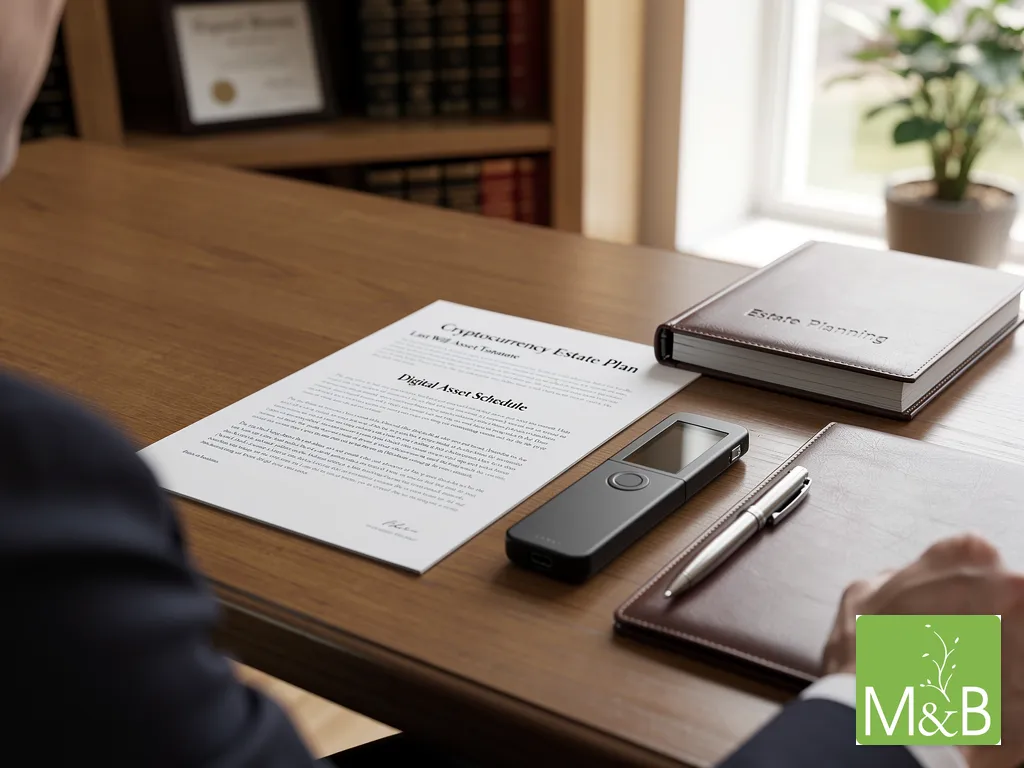
Comprehensive Cryptocurrency Estate Planning Guide for Florida Residents
Cryptocurrency estate planning integrates digital assets such as Bitcoin, Ethereum, NFTs and DeFi tokens into your legal framework to ensure they pass securely to your heirs, addressing unique challenges around private key management, volatility and tax treatment. This guide delivers actionable steps on drafting wills and trusts, appointing a digital executor, securing private keys, minimizing taxes, navigating probate and understanding Florida-specific laws. You will learn how to inventory holdings, draft sample trust language, implement multi-signature storage, and leverage emerging smart-contract wills to protect your crypto legacy.
What Is Cryptocurrency Estate Planning and Why Is It Essential?
Cryptocurrency estate planning means formally including digital currencies in wills and trusts so beneficiaries can access and manage those assets after an owner’s death, preventing permanent loss and unintended tax burdens. By mapping private keys and wallet locations into legal documents, this process ensures continuity of ownership and avoids the volatility-driven complications that arise when coins become inaccessible. Proper planning promotes asset protection, probate avoidance, and financial peace of mind for Florida residents facing evolving regulatory and technological landscapes.
How Does Crypto Estate Planning Differ from Traditional Estate Planning?
Crypto estate planning requires secure handling of private keys rather than relying on custodial institutions, meaning that heirs must be given algorithms and seed phrases instead of account numbers. Unlike conventional assets governed by bank protocols, digital currencies exist on decentralized ledgers, so transferring ownership demands clear instructions on blockchain addresses and wallet encryption keys. These distinctions elevate the importance of technical documentation and specialized trustees empowered to manage blockchain-based property.
What Are the Key Challenges in Planning for Digital Assets?
Digital asset planning must tackle four primary obstacles:
- Access Control – Ensuring heirs can retrieve private keys without exposing them prematurely.
- Security Risks – Protecting seed phrases from theft, loss or tampering.
- Market Volatility – Valuing assets accurately for tax and distribution purposes amid price swings.
- Regulatory Uncertainty – Adapting to evolving IRS, SEC and state laws governing property classification and transfer.
Each challenge underscores the need for robust legal instruments and secure storage strategies that guide beneficiaries through technical and compliance hurdles seamlessly.
Which Digital Assets Are Included in Crypto Estate Planning?
Crypto estate planning encompasses a broad spectrum of digital holdings, including:
- Bitcoin and other proof-of-work coins
- Ethereum and smart-contract tokens
- NFTs representing art, collectibles or real-world assets
- DeFi protocol tokens and liquidity pool shares
By cataloging these assets in a digital asset inventory, you establish clear guidance on how each category is accessed, valued and transferred to beneficiaries.
What Future Trends Are Shaping Crypto Estate Planning?
State and federal legislatures are piloting blockchain-based wills that execute automatically via smart contracts, reducing probate delays. Multi-signature inheritance platforms and decentralized identity tools are emerging to streamline digital executor workflows. As tokenized real estate and on-chain trusts gain traction, estate planners will rely increasingly on programmable inheritance structures that trigger transfers when predefined conditions are met.
How Do You Create a Cryptocurrency Will and Trust?
Creating a cryptocurrency will and trust involves drafting clear legal documents that incorporate digital asset definitions, access protocols and fiduciary assignments to guarantee seamless ownership transfer and probate avoidance for your heirs. By delineating wallet addresses, seed phrase storage methods and trustee powers, this framework preserves privacy and control while meeting Florida’s statutory requirements.
What Legal Requirements Apply to Digital Assets in Wills?
Florida statutes treat digital assets as property, so representing cryptocurrencies in a will requires:
- A clear definition of “digital asset” and enumeration of wallet addresses
- Instructions for private key custody separate from the will
- Appointment of a personal representative with authority to manage blockchain assets
- Compliance with Florida’s electronic wills and self-proving affidavit provisions
These elements ensure that your last wishes take effect without legal ambiguity or compromise of sensitive security information.
How to Inventory and Specify Cryptocurrency Holdings in Your Will?
Begin by listing each asset type, blockchain address and approximate quantity. Next, note the storage location—hardware wallet model or custodial exchange—and the seed phrase or private key backup procedure. Please do not keep the addresses and keys/seed phrases together!!! Finally, assign specific bequests to beneficiaries, such as “0.5 BTC at address 1A2b…” or “all ERC-20 tokens held in MetaMask account.”
What Is the Role of Trusts in Protecting Crypto Assets?
Trusts offer enhanced privacy and efficient distribution by separating asset ownership from probate proceedings. A funded crypto trust can hold wallet addresses and private keys under trustee control, minimizing public disclosure and accelerating transfer. Trust structures also allow conditional distributions—such as releasing funds when a beneficiary attains a given age—while shielding assets from creditors and legal disputes.
How to Draft Sample Will and Trust Language for Crypto?
Consider the following trust clause example:
“I transfer all rights, title and interest in the digital assets identified in Schedule A—including private keys and seed phrases—to the Trustee to hold in trust for the benefit of my named beneficiaries, with the power to convert, exchange or distribute such assets in compliance with the trust terms.”
Customizing this language ensures that trustees can execute transactions on decentralized networks without court intervention.
Why Should You Appoint a Digital Executor or Trustee?
A digital executor possesses technical skills to access blockchain wallets, interact with smart contracts and navigate exchange platforms. Granting fiduciary powers and indemnification protects them from liability while they:
- Secure private keys and seed phrases
- Transfer coins according to your instructions
- Coordinate valuations for tax reporting
- Manage post-death conversions or distributions
Their expertise bridges legal and technical domains, safeguarding your crypto holdings.
What Are the Tax Implications of Inheriting Cryptocurrency?
Inheriting cryptocurrency generally triggers property-tax events under IRS rules, with capital gains and estate taxes based on fair market value. Understanding classification, valuation methods and planning strategies can significantly reduce liabilities for beneficiaries. The estate tax limit is $15 million per person with carryover to the spouse, indexed for inflation. If your assets are over this limit, you should contact us for tax-based planning right away.
How Does the IRS Classify Cryptocurrency for Estate Tax Purposes?
The IRS treats cryptocurrency as property rather than currency, meaning that upon your death, the estate’s value includes digital assets measured at their date-of-death market price. This classification subjects crypto holdings to federal estate tax thresholds and potential state inheritance taxes, depending on the total estate value.
Digital Assets in Estate Planning
Estate planning for digital assets requires careful consideration of how these assets are classified and valued for tax purposes. The IRS treats cryptocurrency as property, which means it is subject to estate tax based on its market value at the time of death. This classification impacts how beneficiaries handle and report these assets.
Internal Revenue Service, “Virtual Currencies”
This citation supports the article’s discussion on the tax implications of inheriting cryptocurrency and how the IRS classifies it.
What Capital Gains and Estate Taxes Apply to Crypto Inheritance?
Beneficiaries receive a stepped-up cost basis equal to the asset’s market value on the decedent’s date of death. Subsequent sales incur capital gains tax based on the difference between sale price and stepped-up basis. Meanwhile, estates exceeding federal exemption limits (currently $15 million per individual for 2026, indexed annually) may owe estate tax up to 40 percent on amounts above the threshold.
How Is Cost Basis Determined for Inherited Digital Assets?
Cost basis equals the cryptocurrency’s fair market value at date of death, established via timestamped exchange records or reputable price feeds. Accurate documentation at that moment ensures correct gain or loss calculations when heirs eventually liquidate.
What Strategies Minimize Tax Liabilities on Crypto Inheritance?
- Gifting up to annual exclusion amounts before death to reduce estate size.
- Establishing irrevocable trusts that remove assets from taxable estate.
- Donor-advised funds or charitable remainder trusts to offset estate tax.
Employing these approaches can lower both estate and capital gains taxes for beneficiaries.
Are There Florida-Specific Tax Rules for Crypto Estates?
Florida imposes no state estate or inheritance tax, making it advantageous for residents to inherit digital assets. However, federal obligations remain, and local property reporting requirements may apply when converting crypto to fiat.
How Can You Secure Crypto Private Keys for Future Generations?
Securing private keys involves selecting storage solutions and documenting access protocols without exposing sensitive information in public documents. Implementing layered security and clear instructions ensures heirs can retrieve assets safely.
What Are Private Keys, Public Keys, and Seed Phrases?
A private key is a secret alphanumeric string granting spending authority over cryptocurrency, while a public key or address is derived from that private key to receive funds. Seed phrases are human-readable backups—typically 12–24 words—that regenerate private keys if a wallet is lost.
Which Secure Storage Solutions Protect Crypto Assets?
Securing Cryptocurrency Private Keys
Securing private keys is crucial for protecting digital assets. Hardware wallets, multi-signature wallets, and encrypted digital vaults are recommended storage solutions. These methods help safeguard keys against cyber threats while allowing controlled access.
National Institute of Standards and Technology, “Digital Identity Guidelines” (2017)
This citation supports the article’s discussion on securing crypto private keys for future generations.
How Should Access Information Be Documented Safely?
Record wallet models, seed-phrase storage locations and executor contact details in a separate secure file—ideally protected by multi-factor authentication. Avoid including private keys in the will; instead, reference a digital vault or safe deposit instructions.
What Common Security Mistakes Should Be Avoided?
- Storing seed phrases in email or cloud storage without encryption
- Sharing private keys unnecessarily with third parties
- Failing to update documentation when wallet infrastructure changes
Preventing these errors reduces the risk of irrevocable asset loss.
Who Should You Choose as a Digital Executor or Trustee?
Selecting a capable digital executor ensures that your blockchain assets are managed effectively, legally and securely. Identify individuals or institutions with technical competence, fiduciary integrity and familiarity with Florida’s probate system.
What Are the Responsibilities of a Digital Executor?
- Locate and decrypt private keys
- Transfer assets to beneficiary-designated addresses
- Handle exchange accounts for tax reporting
- Coordinate with legal counsel and tax professionals
What Qualities Make an Ideal Digital Executor or Trustee?
- Tech-savvy understanding of blockchain and wallets
- High ethical standards and fiduciary accountability
- Familiarity with Florida probate and trust administration
- Willingness to follow precise, documented instructions
How Is Legal Authority Granted to Digital Executors in Florida?
You grant authority via your will or trust instrument, specifying powers to access digital wallets, engage exchanges and convert assets. A self-proving affidavit and letters of administration streamline court recognition of their fiduciary role.
How to Provide Clear Instructions for Digital Asset Management?
Include step-by-step protocols for wallet access, backup validation and transaction initiation. Append screenshots, hardware wallet guides and contact details for technical support to eliminate ambiguity during execution.
How Does Probate Affect Cryptocurrency and Digital Assets?
Cryptocurrency may be subject to probate, but decentralized features and lack of universal custodians pose unique procedural hurdles. Crafting appropriate legal structures can expedite distribution or bypass probate entirely.
Does Cryptocurrency Go Through Probate in Florida?
Yes, if digital assets are held in your name without a trust or joint ownership arrangement, they enter probate as part of your estate’s assets. The personal representative must petition the court to recognize and administer crypto holdings.
What Challenges Does Decentralization Present in Probate?
Courts require proof of asset existence and ownership, yet blockchain accounts lack traditional documentation. Without clear instructions, certifying access to exchanges or wallets can delay administration and increase costs.
How Can Probate Be Expedited for Crypto Assets?
Obtaining a court order to empower digital executors to access private keys and exchange accounts speeds up asset recovery. Including a detailed digital asset schedule with corroborating exchange statements further accelerates court approval.
What Are the Alternatives to Probate for Crypto Inheritance?
- Revocable or irrevocable trusts holding private keys outside probate.
- Joint tenancy with right of survivorship on custodial exchange accounts.
- Transfer-on-death assignments through platforms that support POD designations.
These options avoid public probate processes and protect privacy.
What Are the Special Considerations for NFTs and DeFi in Estate Planning?
NFTs and DeFi positions introduce novel valuation, transfer and automation requirements in estate planning, necessitating specialized clauses for smart-contract-driven assets.
How Are NFTs Valued and Transferred in Estate Plans?
NFT valuation relies on recent sale prices or floor prices from major marketplaces. Transferring NFTs requires specifying platform credentials, wallet addresses and any royalty obligations under underlying smart contracts.
What Inheritance Issues Arise with DeFi Protocols?
DeFi positions often reside in liquidity pools or lending platforms governed by smart contracts, so heirs must understand contract interactions, impermanent loss risks and governance token privileges to liquidate or manage holdings.
Can Smart Contracts Automate Crypto Inheritance?
Yes, programmable inheritance contracts can release funds automatically when triggered by an oracle reporting an owner’s death certificate or a multisig threshold achieved by designated beneficiaries. This removes reliance on traditional probate.
How to Include Tokenized Real Estate and Other Digital Assets?
Tokenized real estate and security tokens should be cataloged alongside NFTs, with clear instructions on platform access, legal transfer procedures and compliance with securities-law requirements.
What Are Florida-Specific Laws and Resources for Crypto Estate Planning?
Florida leads in digital asset statutes that empower fiduciaries and define digital property rights, providing a clear framework for integrating cryptocurrencies into estate plans.
Which Florida Statutes Govern Digital Asset Estate Planning?
Chapter 731 of the Florida Statutes defines digital property and authorizes fiduciaries to access electronic communications and digital assets under specific procedures. Chapter 709 addresses electronic wills and self-proving affidavits.
Florida Statutes and Digital Assets
Florida law provides a framework for digital asset estate planning, with specific statutes addressing fiduciary access and digital property rights.
How Do Florida Probate and Tax Rules Impact Crypto Inheritance?
Florida’s absence of inheritance tax simplifies transfers, but probate courts require evidentiary support for asset valuations and instructions for private key management under the Uniform Electronic Transactions Act.
Where to Find Florida Crypto Estate Planning Attorneys?
Look for attorneys certified in Estate Planning by the Florida Bar who list “digital asset planning” or “cryptocurrency estate planning” on their firm websites. Bar association directories and local seminars on blockchain law provide referrals to qualified professionals. At Murphy & Berglund, we take pride in planning for client’s cryptocurrency along with their other assets and will discuss your specific circumstances during a consultation.
What Are Recent Legal Developments Affecting Florida Crypto Estates?
Florida recently adopted updates clarifying fiduciary access to digital assets and permitting electronic wills, positioning the state at the forefront of blockchain-friendly estate legislation.
What Are Common Questions About Cryptocurrency Estate Planning?
This section addresses specific concerns Florida residents often raise when including digital assets in their legacy planning.
What Happens to My Bitcoin If I Die Without an Estate Plan?
Without instructions and key management, coins remain locked forever on the blockchain, effectively reducing available supply and creating unintended wealth loss for intended heirs.
Can Trusts Hold Cryptocurrency and How?
Trusts can own wallet addresses and private keys, with trustees empowered to execute transactions on behalf of beneficiaries, thereby avoiding probate and preserving privacy.
How Do I Include Bitcoin and Other Cryptos in My Will?
Detail each cryptocurrency by blockchain address, amount and storage type, then reference a securely stored key-access protocol rather than embedding sensitive data directly in the will.
Is Inherited Cryptocurrency Taxable?
Inherited crypto is treated as property by the IRS, subject to a stepped-up basis at date-of-death valuation and later capital gains tax on appreciation beyond that basis.
How Do I Protect My Crypto Assets from Being Lost?
Implement multi-signature wallets, hardware devices and encrypted vault storage, paired with clear executor instructions and separate key-custody documentation to ensure heirs can retrieve funds.
By following these structured steps—inventorying assets, drafting precise legal language, appointing a qualified digital executor, employing advanced security solutions and aligning with Florida’s evolving statutes—you can confidently secure your digital legacy and provide your beneficiaries with seamless access to your cryptocurrency holdings.
Authored by Michelle A. Berglund-Harper, Esq., a member of The Florida Bar since 2010, Partner at Murphy & Berglund, PLLC since 2012. A link to the author’s bio can be found here.